
Essays · October 2026
Artificial Intelligence Is Now Super Intelligence
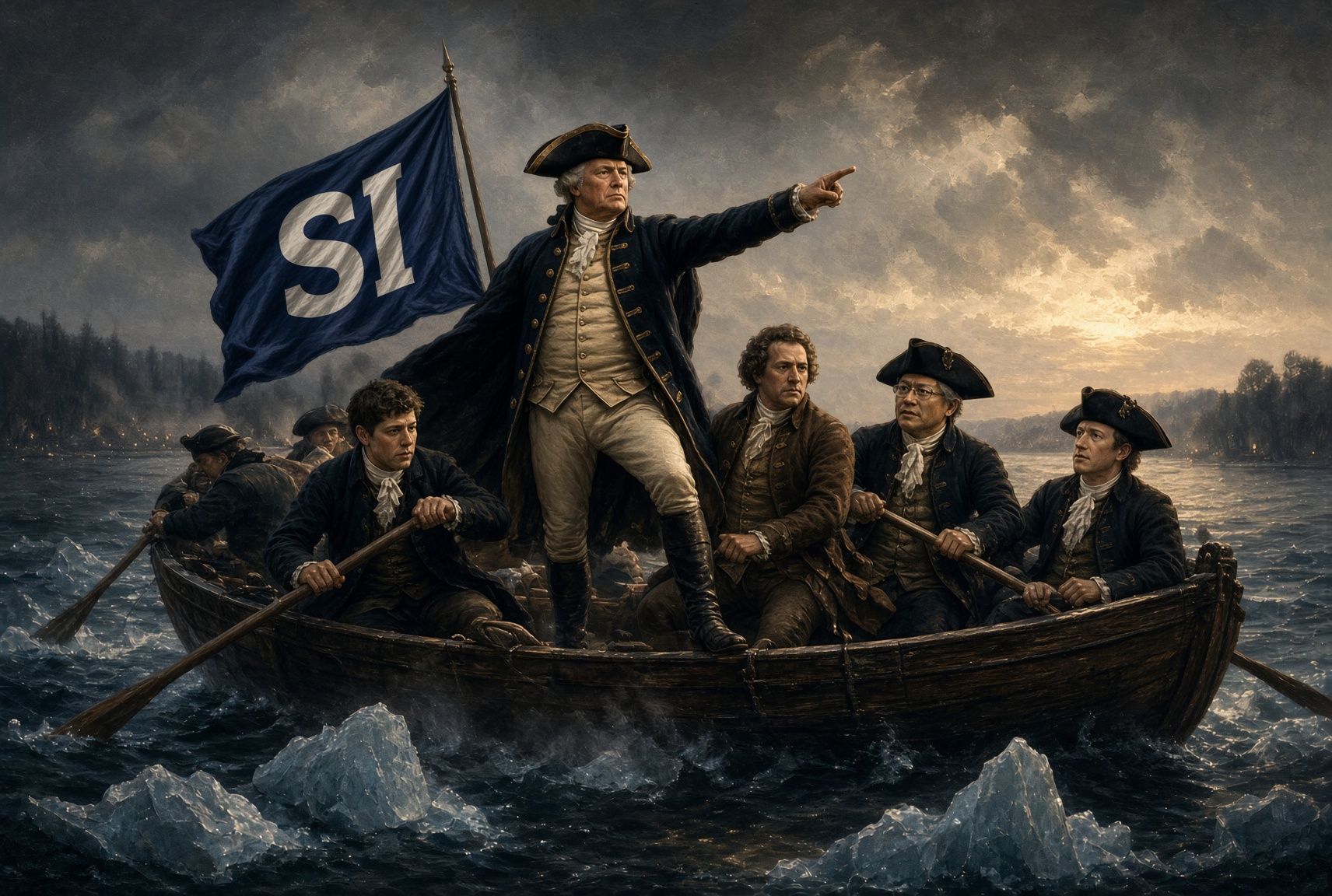
I disagree with Donald Trump about most things. I'm from Los Angeles. It's practically a residency requirement.
But on September 22nd he stood up at the UN General Assembly and renamed artificial intelligence. It's "super intelligence" now. SI. In all U.S. government documents, and, he hoped, the world's.
I chuckled. Then I thought about it for a day. Then I got annoyed, because he's right.
How we got here, in ten days
This did not come out of a policy process. It came out of a poll.
On September 19th he posted on Truth Social that "artificial intelligence" was inaccurate and "very ineloquent," and asked his followers to vote on a replacement. The options were Superior Intelligence, Extreme Intelligence, and Supreme Intelligence. The State Department has since ordered its diplomats to say it with a straight face.
Superior won. Then his religious followers pointed out that God is the only Supreme Intelligence, so he deleted that option, blamed the Supreme Court, and ran it again. Superior won again, barely. Then on Monday he ran a third poll, Super versus Superior, and this time Super won by thirty points. Three polls in three days to name a technology. That's more process than the actual technology got.
Same weekend he announced an "AI Force," modeled on Space Force, and said he'd appoint an AI czar, adding that only high IQ individuals need apply. Scott Bessent was the frontrunner for about a week until Trump said Bessent didn't want the gig, which is the most relatable thing anyone in Washington has done this year.
Then came the UN speech. The word "artificial," he said, makes intelligence sound fake, and it is not fake, it's actually amazing. He compared the people warning about AI to the people who warned about climate change, which is a sentence I'm going to leave right there without touching.
Then the dinners. A state dinner for Xi Jinping with Sam Altman and Jensen Huang at the table and one empty chair, because Dario Amodei had a "scheduling conflict," which is what you say when the host's Pentagon called your company a supply chain risk and you are currently suing them over it. Three nights later Trump had Amodei over anyway, just the two of them, 10 p.m. at the White House. We don't know what they ate. We know there was no angry post the next morning, which in this administration counts as a joint communiqué.
Then a lunch on the 29th with Zuckerberg, Huang, Pichai, Brockman, Amodei, and the Palantir guys, after which Trump walked out and told reporters, "It's not artificial. We all agree on that." Everyone signed something called the White House Accord on Superintelligence, described as "morally binding," which is a new category of binding I'd like to try on a few of my vendors and people who have wronged me.
That evening he signed the executive order. Federal agencies will now use "Super Intelligence" and, per the actual text, "will not acknowledge" the old term. The United States government no longer acknowledges artificial intelligence. Somewhere, a procurement officer is updating a dropdown.
The old name was a grant application
Here's the part worth knowing. "Artificial intelligence" was never a description. It was a pitch.
John McCarthy coined it in 1955 in a funding proposal for a summer workshop at Dartmouth. Ten men, two months, and a promise that significant progress could be made on getting machines to simulate learning. He asked the Rockefeller Foundation for $13,500. He got $7,500. The first AI budget was cut by half before the field existed. Seventy years later the industry is worth trillions and the pitch deck is still slightly over-promising. Some things never change.
McCarthy said years later that he picked "artificial intelligence" partly to escape "cybernetics," because that word belonged to Norbert Wiener, and McCarthy didn't want to accept Wiener as a guru or argue with him. So the name of the defining technology of our era was a branding decision made to dodge a colleague. The most human thing about AI is its name.
And the brand has aged badly. Nobody is proud of artificial anything. Artificial sweetener. Artificial turf. Artificial flowers. It's the word for the thing you settle for.
The doomers named it first
The funny thing is the name Trump picked was already taken, by the people he was yelling at.
Nick Bostrom's 2014 book is called Superintelligence. It's the founding text of the AI doomer canon. Ilya Sutskever left OpenAI and named his company Safe Superintelligence. Zuckerberg spent last summer hiring people into Meta Superintelligence Labs at salaries you'd normally associate with a striker. Bernie Sanders has a bill with "superintelligence" in the title, and it is not a subsidy.
So the most frightened people in the industry and the most aggressive people in the industry had already agreed on a word. Trump walked in late, tore off the warning label, and put it on a hat.
That is, I'll admit, the American way. The worriers build the brand. Someone louder sells it.
Super is a promise, not a description
Nobody in the labs calls what ships today superintelligence. It's the thing after the thing after this one. The name describes the destination, not the car.
And that's fine. That's what names are for in America. Manifest Destiny was a rename. The Department of War has been renamed twice. Space Force was a name before it was a force. You name the destination, then you build toward it, then you act like it was always called that.
The doomers wrote the word down as a warning. The labs put it on the door as a goal. Trump put it on the letterhead and called it done. Three groups, one word, three completely different meanings, and only one of them signed an executive order.
Say what you want about the man, and I usually do. He understood something the engineers never did. The product was fine. The name was the bug.
Welcome to SI. Morally binding.