
Essays · September 2026
EU Wants AI Sovereignty. Is It Brave Enough to Fight for It?
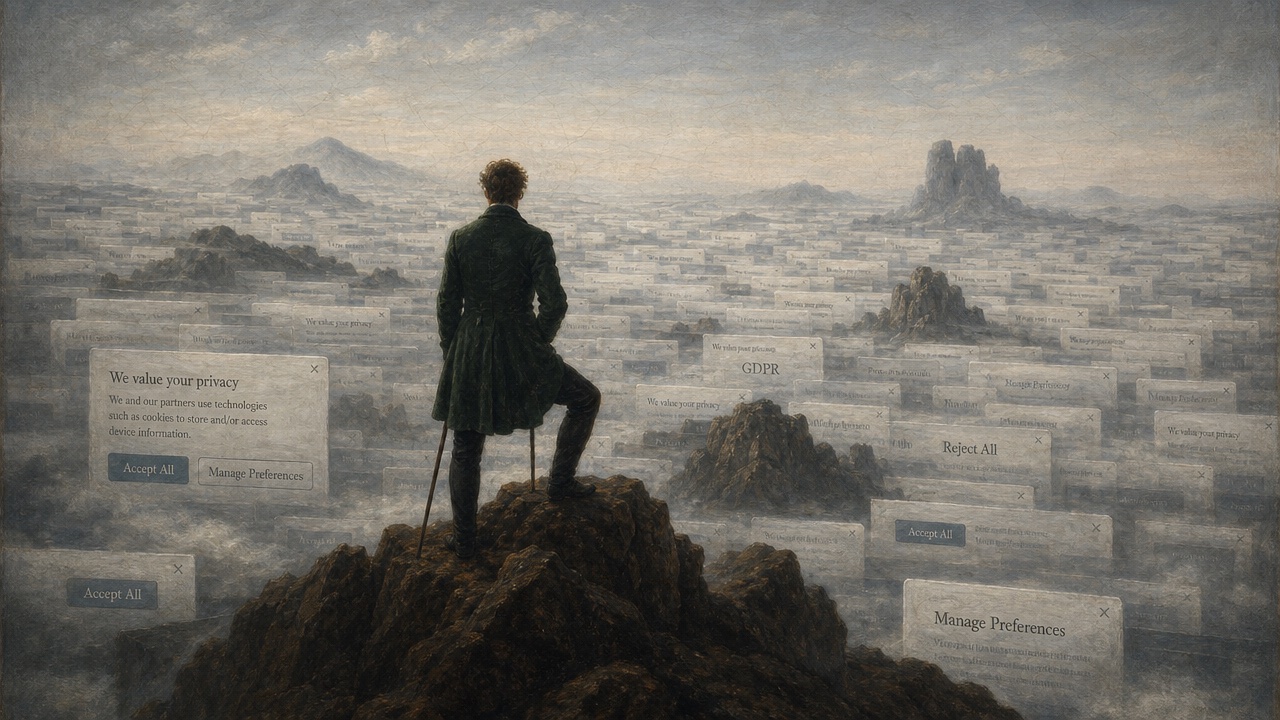
I have sat through a few AI talks in Europe. Given some too. Professionally, for fun, and occasionally for a plate of open-faced sandwiches.
The first question is never "what can I do with this?"
The first question is about GDPR.
The EU wants AI sovereignty. Its own models, its own rules, its own infrastructure, not fully plugged into two companies on the American west coast. Totally fair. Correct, even.
Can American tech companies be trusted after everything they've done? Probably not. And I say that as an American who worked at Myspace, so I have seen the sausage get made and then sold to Rupert Murdoch, only to then get beaten by Facebook, who coincidentally started this whole "you did what with my data?" movement.
They're called frontier models for a reason
Nobody in the industry calls them "compliance models." They're frontier models. The word was chosen on purpose.
A frontier is the edge of the map. Nobody has surveyed it. There are no roads, no rules, no one to ask. The people who go out there are not careful people. They are a little bit crazy and a little bit greedy.
Americans know something about this. It's our whole origin story. Pack the wagon, head west, figure out the water rights later. It's messy, it's frequently unjust, and it built the most powerful economy in history. Not because the plan was good. There was no plan. That was the whole point.
Europe looks at a frontier and sees a place that needs a permit office.
We have done this before, and you were there
Here comes the American part, and I won't apologize for it.
We led the last one. The internet, mobile, the cloud, social. Europe had the engineers, the universities, the money, the taste, and a whole lot of very tidy standards bodies. America had a bunch of people willing to be wrong in public, at scale, with other people's money. Lots of money.
The result was that Europe got the best privacy law in the world and America got the companies that law was written about.
I'm not saying that trade was fair. I'm saying it was a trade, and Europe made it, and now it's a little surprised that the same trade keeps producing the same result.
What brave actually looks like in Europe
Europe is not going to out-cowboy Silicon Valley. But sovereignty doesn't have to mean training the biggest model. It can mean owning the ground the models run on.
A frontier model is, at the end of the pipe, a very large building full of very hot chips. It needs cheap power, cold air, and a lot of water. California has none of those. American hyperscalers are building in the desert and arguing with farmers about the aquifer.
Norway runs on hydro. Sweden and Finland have wind, water, and nuclear. Winter is free cooling for half the year. The fjord is an air conditioner.
That's one path. Own the building, own the power, own the law it sits under. Not sexy, but neither is Texas.
The other path is simpler and Europeans hate it more.
Build insanely cool shit with someone else's technology.
Yes, American technology. Yes, the big scary wolves. Claude, OpenAI, Nvidia, whoever. The frontier isn't the lab. It's everything you can build once the lab exists.
The cowboys just asked for a speed limit
Here's the thing that happened while I was writing this.
Dario Amodei, the CEO of Anthropic, published an essay on Saturday titled "We Must Pace the Frontier," arguing that AI companies should deliberately slow the rate at which they advance model capabilities. Sam Altman agreed. Even Elon Musk agreed.
Read that again. The wildest cowboys on the frontier, the guys who built the thing with no plan and other people's money, are standing at the edge of the map saying "hang on."
Two ways to read that.
The first is that it's the most American thing I've ever seen. Only in America do you get to build the scary thing, sell it to everyone, and then also be the hero who warns about it. It's a brag. "We are going so fast we have to slow ourselves down." Nobody in Brussels has ever had that problem.
The second is that it's genuinely a little worrying. When the people who ride out first come back and say the territory might be too much, that's not a press release. That's a scout.
Which puts Europe in a strange spot. The one time it was right to be cautious, it wasn't cautious because it saw something. It was cautious because it's always cautious. A broken clock, twice a day.
So no, I don't think the answer is for Europe to become America. I think the answer is for Europe to earn its caution. Go out there. Build the power, sign the permits, run the models on your own water, and most importantly, build some insanely cool shit with all that cold water. Then, when you say slow down, it means something.
Right now it just means you never left the wagon.