
Essays · October 2026
I Wear Meta Glasses in Oslo. Arrest Me.
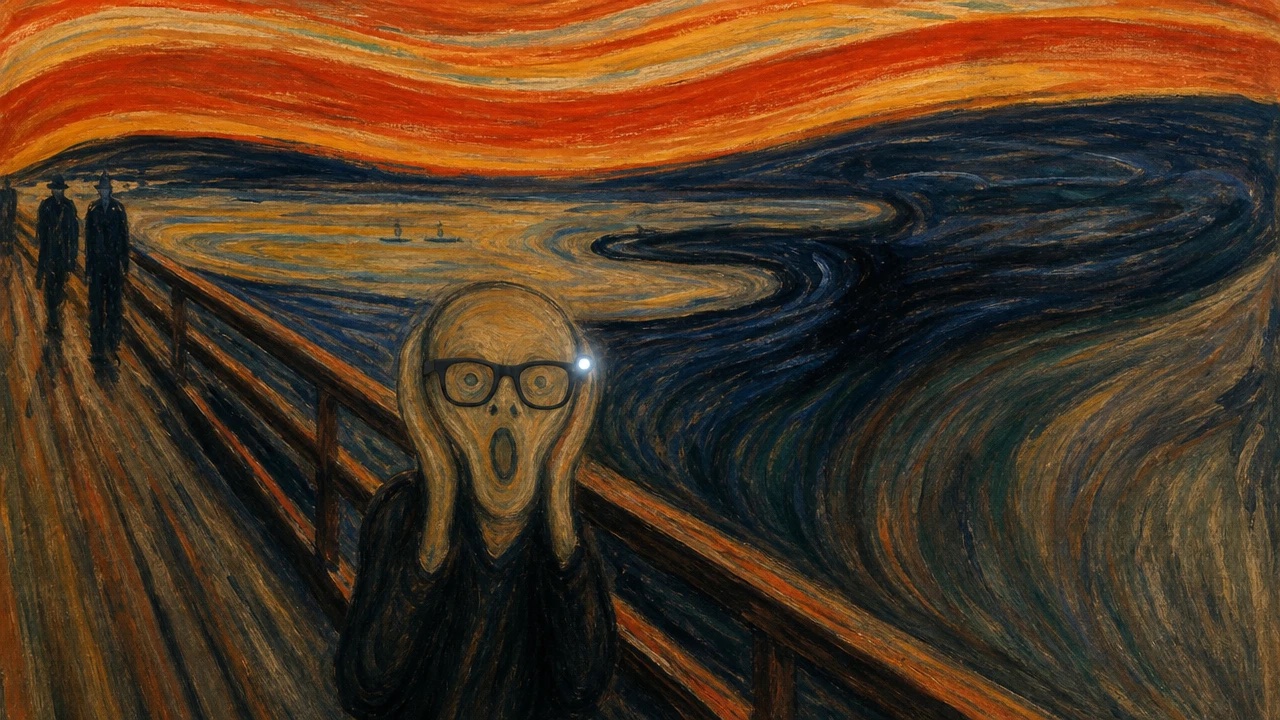
I wear Meta glasses around Oslo. Apparently that makes me part of a national problem.
Norway's brand new Digital Minister, Torgeir Micaelsen, wants a temporary ban on AI glasses. He's been in the job for a few weeks and has already landed on the opposite conclusion from his predecessor, Karianne Tung, who wanted tighter rules but no ban. DNB has already banned them from its offices and branches. Schools and municipalities started banning them in August after the education minister asked them to. That is all perfectly reasonable.
This is a country where you can look up your neighbor's wealth online. We decided long ago that everyone knowing what everyone earns is fine. The glasses, though? That's where we draw the line.
Very Norwegian. Ban first, utredning (study) later.
I'll say it the American way: this is nanny state nonsense. And I'll say it the Norwegian way: it's maybe a little premature, perhaps.
How I actually use them
My confession: I almost never take photos with them. I would never film someone without them knowing, either from the indicator light or because I told them. The creep factor is real, and I won't pretend otherwise.
What I use them for is mostly boring. Music, without earbuds jammed in my ears, so I still hear the city. I like hearing Oslo. The trams, the kids, the guy yelling at the seagulls. I also talk to them. I have an AI assistant with me all day, so when I want to know something I don't have to pull out my phone and disappear into it. Less screen, more street. That's the dream we were promised.
I'm honestly thinking about buying a pair without cameras, to get all of that without the creep factor. Which tells you something. The useful part isn't the camera.
"But you're on camera all day anyway"
You are. Walk into a store, a train station or an apartment lobby and you're being recorded, whether you notice or not. That's modern life.
But it's not a fair comparison, and I won't hide behind it. A CCTV camera sits on a wall, usually with a sign. It isn't at eye level, two feet from your face. Being recorded up close without knowing it is a different feeling, and the people worried about it aren't being hysterical.
So yes, there's a real problem here. I just don't think a ban solves it.
A ban that needs exceptions isn't a ban
Micaelsen is already open to exemptions for blind people, which Blindeforbundet has pushed for. For someone who can't see, glasses that read signs, describe the room and recognize a bus number are life-changing. The minister knows it, which is why the carve-outs started before the ban even exists. Then come the next exemptions: medical, professional, accessibility. Eventually you've written a regulation and just called it a ban for the headline.
He's also setting up an expert group to evaluate the ban. That's also very Norwegian, and it will keep a lot of people busy in a lot of meetings.
I tend to approach new technology by asking what's good about it first. Not because I'm naive, but because that's where the value is. You don't throw the baby out with the bathwater. You change the water.
What this is really about
Let's be honest. This isn't about glasses. It's about not trusting American tech companies, Meta in particular. And that mistrust has been earned.
- Meta faces a US class action and a UK investigation over claims that workers at a subcontractor in Kenya reviewed sensitive footage captured by the glasses.
- Privacy advocates have asked US regulators to block Meta's reported plans to add facial recognition.
- A Dutch consumer group found it could still record video after covering the recording light with a sticker.
Those are the real problems. Footage leaving the device. Strangers reviewing it. Facial recognition. A privacy light defeated by a sticker. Regulate those, hard. Ban facial recognition on wearables. Require on-device processing. Make the light tamper-proof. That would protect people. Banning the frames mostly protects the government's ability to say it did something.
Sovereignty without a replacement is just a ban
I've written before about Europe's push for AI sovereignty. Here's the uncomfortable part: Europe is increasingly afraid of Meta, Google, OpenAI and the rest, and completely dependent on them at the same time. We run our companies on their clouds, our communication on their platforms and our kids' childhoods on their apps.
The gap isn't small either. According to a June 2026 paper from The Future Society, frontier AI models come almost entirely from the US or China, the US has roughly sixteen times the EU's AI supercomputing capacity, and only 15% of the world's hyperscale data center capacity sits inside EU borders.
And Norway? Our oil fund owns over 1% of Meta. We're happy to take the dividends. We just don't want the glasses.
You can't have sovereignty without an alternative. And neither Norway nor Europe has built the conditions for one. We tax founders on paper wealth they can't spend. We're more comfortable funding studies than startups. The ambitious ones leave, and then we wonder why every interesting product comes from California.
A ban is the cheapest form of sovereignty there is. It costs nothing and builds nothing. If we put half the energy that goes into banning the latest thing into building the next thing, maybe the first privacy-first AI glasses would come from Oslo instead of Menlo Park. Norway has the trust, the capital and the values to make that product. What it lacks is the appetite.
My take
Regulate the creep, not the camera. Punish covert recording. Ban facial recognition on wearables. Force Meta to keep footage on the device. Let venues set their own rules, the way DNB just did. That's the high-trust, Nordic way to handle this, and ironically, it's exactly what the previous minister proposed.
Then do the hard part: build something better. Sovereignty isn't saying no to American companies. It's not needing them.
Until then, I'll be the guy on Bogstadveien listening to music through his sunglasses. Nodding at you. Not recording. Probably just asking an AI what kind of tree that is.